
Most local businesses do not have a funnel. They have a leaky bucket. Here is the exact structure of a sales funnel that turns strangers into leads and leads into paying customers, step by step.
The word funnel gets thrown around constantly in marketing, but most local business owners have never actually built one. They have a website. They run some ads. They answer the phone when it rings. But the structured, systematic process of moving a stranger from awareness to paying customer does not exist in their business. What they have instead is hope. Hope that the right people find them, hope that those people call, and hope that those calls turn into jobs.
Hope is not a system. A funnel is.
What a Funnel Actually Is
Stay Updated
Never Miss an Update
We make business AI automation easy. Complete business systems, AI technology solutions, custom web development, and digital marketing from $149/month.
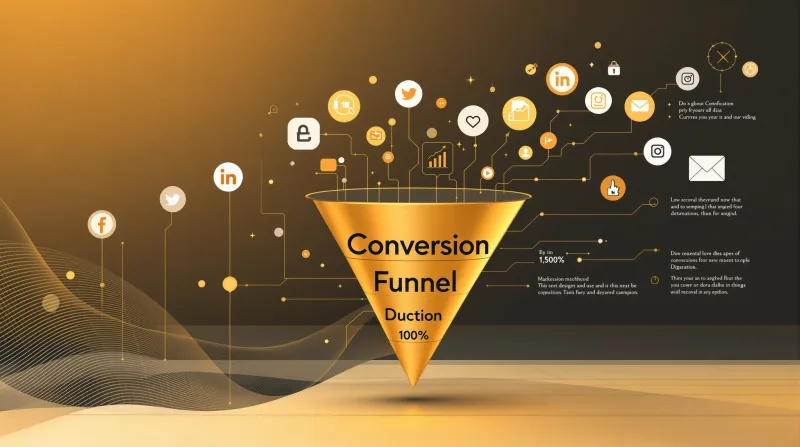
A sales funnel is nothing more than a series of steps that guides a person from not knowing your business exists to becoming a paying customer. Each step has a specific purpose, and each step is designed to move the person to the next one. The reason it is shaped like a funnel is that not everyone who enters at the top will make it to the bottom. Some people will drop off at each stage, and that is normal. The goal is not to eliminate drop-off entirely. It is to minimize it at every stage through better systems.
For a local service business, a funnel typically has four stages: awareness, interest, decision, and action.
Stage 1: Awareness — Getting Found
Before someone can become a customer, they need to know you exist. For local businesses, awareness comes from five primary channels. Google Search is the biggest, where both organic results and paid ads put you in front of people actively searching for your services. Google Business Profile is the map listing that appears in local search results, often the first thing a searcher sees. Social media, particularly Facebook and Instagram, builds passive awareness in your local community. Referrals from satisfied customers are the highest-trust source of new leads. And direct marketing like door hangers, yard signs, and vehicle wraps keeps your brand visible in the neighborhoods you serve.
The key at the awareness stage is not to sell. It is to be findable and credible. When someone searches for HVAC repair near me, your business needs to appear. When they click through, they need to immediately see that you are legitimate, reviewed, and professional. That is the job of this stage: get found and make a good first impression.
Common Awareness Mistakes
Spending money on ads before your website is ready to convert is the most expensive mistake at this stage. Driving traffic to a website that does not convert is like filling a bucket with a hole in the bottom. Fix the bucket first, then turn on the water. Another common mistake is ignoring your Google Business Profile. For local services, GBP is often more valuable than your website. Keep it updated with photos, posts, and prompt review responses.
Stage 2: Interest — Building Trust
A visitor has found your website. They know you exist. Now they need a reason to choose you over the other options they are evaluating. This is the interest stage, and it is where most local business websites fail.
The interest stage is built on trust signals. Reviews and testimonials are the most powerful. A business with 150 five-star reviews and detailed customer stories will outperform a business with a generic portfolio every time. Before-and-after photos show proof of quality work. Certifications and licenses demonstrate legitimacy. Clear pricing information or at minimum, pricing ranges reduces anxiety. And a professional, fast-loading website signals that this is a business that takes itself seriously.
Content also plays a role. Blog posts, FAQ pages, and educational content demonstrate expertise and help with SEO. A roofing company that publishes an article on How to Know If Your Roof Needs Replacement is positioning itself as the expert in the prospect's mind before any sales conversation happens.
Common Interest-Stage Mistakes
Having a website that talks about what you do but never addresses what the customer is worried about. Your prospect is not thinking about your 20 years of experience. They are thinking will this company show up on time, do the work right, and charge a fair price. Speak to their concerns, not your resume.
Stage 3: Decision — Making It Easy to Say Yes
The prospect trusts you. They are ready to move forward. Now the question is how easy do you make it for them to take action. The decision stage is where friction kills conversions. Every obstacle between the prospect's intent and their action costs you money.
At this stage, your website needs clear, prominent calls to action on every page. A clickable phone number in the header that works on mobile. A short contact form, three to four fields, positioned where the visitor is already engaged. An online scheduling tool that lets them book without calling. And multiple contact options: phone, text, form, and chat, so they can choose their preferred channel.
Speed matters enormously at this stage. If a prospect fills out a form and hears nothing for hours, they will contact a competitor. Automated instant responses, whether by text, email, or AI phone call, keep the prospect engaged during the critical decision window.
Common Decision-Stage Mistakes
The biggest mistake is making people work to give you money. If a prospect has to hunt for your phone number, navigate to a separate contact page, fill out a long form, and then wait for a callback, you are introducing friction at every step. Each point of friction loses a percentage of prospects. Compound those losses across four or five friction points and you can easily lose 60 to 70 percent of interested visitors before they ever become leads.
Stage 4: Action — Converting and Following Up
The lead has reached out. A form was submitted, a call was made, or an appointment was booked. Now the sale needs to be closed. For service businesses, this usually means a site visit, an estimate, and a follow-up.
The action stage is where CRM and automation become essential. When a new lead enters the system, an automated sequence should trigger: an immediate confirmation message, a reminder before any scheduled visit, a follow-up after the estimate is sent, and escalating check-ins if the prospect goes quiet.
The businesses that automate this stage close 30 to 50 percent more jobs from the same number of leads compared to businesses that rely on manual follow-up. The reason is consistency. Humans forget. Systems do not.
The Post-Sale Funnel
The funnel does not end when the job is done. The post-sale stage is where referrals and repeat business are generated. An automated sequence after job completion should include a thank-you message, a review request sent to the customer's phone with a direct link to your Google Business Profile, a follow-up survey asking about their experience, and periodic check-ins for maintenance or seasonal services.
Every completed job should generate at least one review and one referral opportunity. If it does not, you are leaving long-term revenue on the table.
Putting It All Together
A complete funnel for a local service business looks like this. Awareness: the prospect finds you through Google, ads, or referrals. Interest: your website, reviews, and content build trust. Decision: clear calls to action and fast response make it easy to engage. Action: CRM and automation ensure consistent follow-up and close more jobs. Post-sale: automated review requests and check-ins generate referrals and repeat business.
Each stage feeds the next. Weakness at any stage limits the performance of every stage after it. A business with great SEO but a terrible website wastes its traffic. A business with a great website but no follow-up system wastes its leads. A business with great service but no review system wastes its reputation.
The businesses that grow predictably are the ones that build every stage of the funnel deliberately and let systems handle the execution.